
Let's name what you're experiencing
Orgasm used to feel inevitable. Now it feels like a guessing game. Some days your body cooperates. Other days you're climaxing fine, then suddenly you plateau and can't cross the finish line no matter what you try. This isn't a sign you're broken. It's a sign that something in your arousal system has shifted, and you need to recalibrate.
Inconsistent orgasms are wildly common, and they have three main culprits. Understanding which one is yours changes how you approach the problem.
Why orgasms become inconsistent
This happens for entirely different reasons depending on your situation. Some people experience inconsistency because their baseline arousal level has dropped. Others lose the ability to get there because they're chasing the same pattern that used to work, but their body's response time has changed. Still others find that their mind is doing the heavy lifting now, and the slightest distraction pulls them off the edge.
Reason 1: Arousal threshold has shifted. Your body might need more time to build arousal, stronger stimulation, or a different kind of stimulation than it used to. What felt like maximum intensity five years ago might feel like a medium setting now. The clitoris has around eight thousand nerve endings, and the pathway to activation isn't linear. If the threshold changes, consistency tanks.
Reason 2: You're not warming up the same way anymore. Inconsistency often arrives when the foreplay timeline contracts. You skip the first ten minutes, jump straight to what used to be "middle," and your body hasn't caught up. Arousal is a chain reaction, and if you're missing steps, the chain breaks.
Reason 3: Mental load is interfering. You used to be able to turn your brain off. Now there's too much happening. Work stress, relationship friction, body image thoughts, pressure to perform. The mind is the biggest organ involved in orgasm, and when it's occupied, the body doesn't follow.
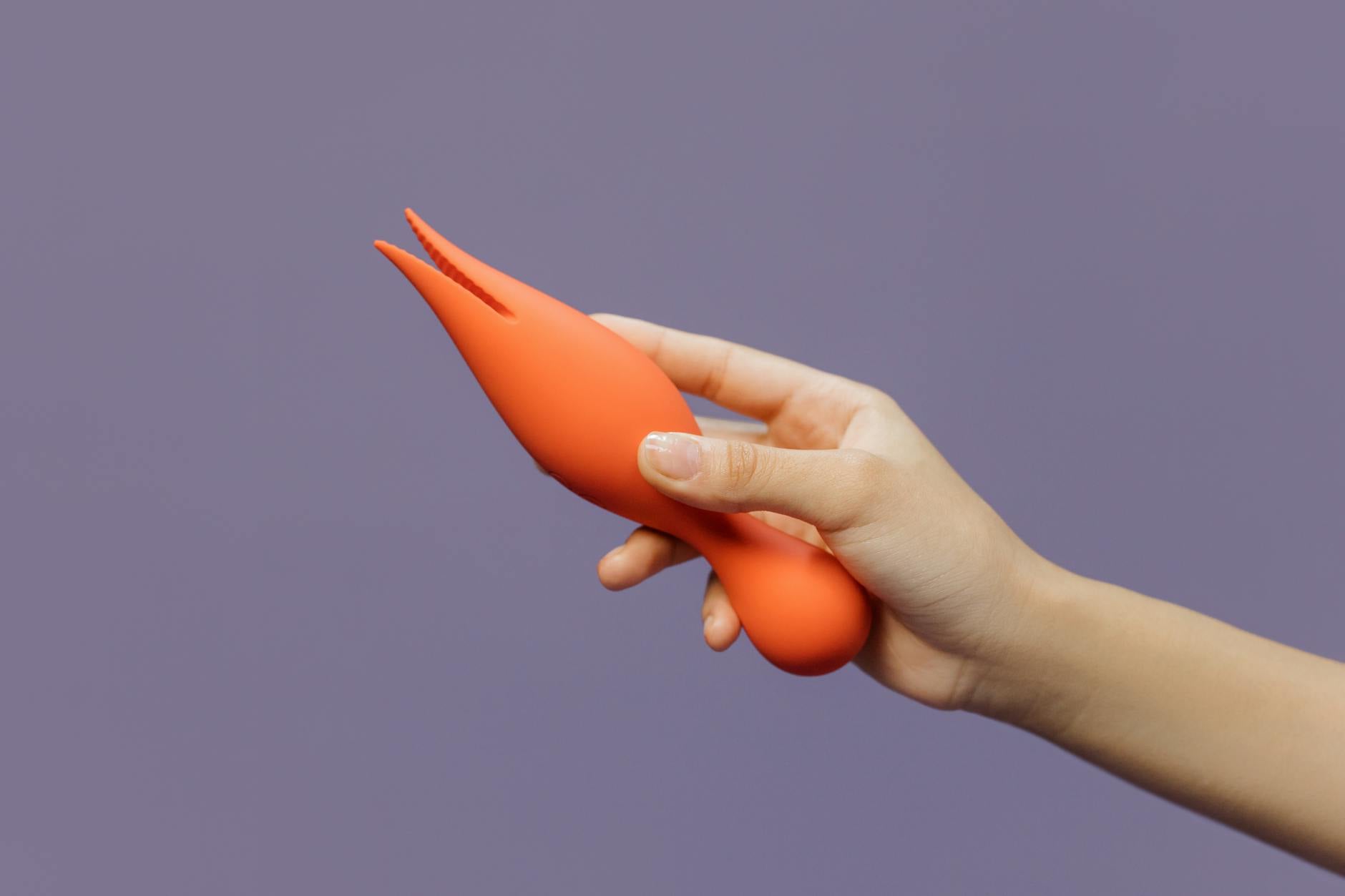
Photo by cottonbro studio on Pexels
How lemon vibrators help rebuild consistency
Lemon clitoral vibrators work so well for inconsistency because they solve all three problems at once. Here's how.
They dial in your threshold. Lemon suction toys create a different kind of stimulation than traditional vibrators. Instead of direct friction, they use gentle suction combined with patterns. This means you can find your exact intensity sweet spot without the learning curve of another vibrator. You start at pattern one, subtle and exploratory, and work up. Most people find their window within the first few sessions.
They shorten the ramp-up time. Because suction feels novel and concentrated, your body typically responds faster than it would to familiar touch. That doesn't mean you skip foreplay. It means your arousal accelerates in a way that works for your current sensitivity. If your body used to need two minutes and now needs five, the lem bridges that gap efficiently.
They anchor your attention. The suction sensation is so distinct that it hijacks your overthinking. Your brain can't think about the presentation tomorrow when your clitoris is experiencing something this novel. It's not magic. It's just focused enough stimulation that your mind can't wander.
Beyond the physical, lemon vibrators signal permission. You're not trying to recreate how sex used to work. You're exploring how it works now. That mental shift alone often breaks the inconsistency cycle.
Building your comeback routine
Inconsistent orgasms respond best to a structured approach for two weeks. After that, you can loosen up, but consistency doesn't return without a little repetition.
Start with the same time of day and the same setup. If you're inconsistent, your nervous system has learned to expect uncertainty. You're retraining it, which means some predictability helps. Morning sessions before your brain gets loud, or evening when you're alone with space to focus. Choose one window and stick to it.
Begin with a five-minute warm-up that doesn't involve the vibrator. Touch yourself, get your arousal moving, let your breathing shift. Then introduce the lemon clitoral vibrator on pattern one for two minutes. Just presence. Just sensation. Don't chase the orgasm yet.
Move to pattern two for another two minutes. Notice what changes. Does your breathing shift? Does the sensation move, or does it stay concentrated? You're gathering data, not performing.
Some people orgasm here. Most don't on day one, and that's fine. The goal isn't the climax. The goal is consistency of arousal response. If you make it to pattern three without losing sensation, your body remembered the pathway.
Over two weeks, you'll notice one of two things. Either you'll find the pattern that works and your body will start anticipating it, or you'll discover that your new sweet spot is patterns two and three held together, or pattern four with a different approach. The point is your nervous system rebuilds the reliability pathway.
The role of expectations
Here's the part most people skip, and it's why they stay stuck. Inconsistency persists because you're measuring success against the old definition. You used to come in five minutes with minimal effort. That was never going to last forever, and it's not the standard to keep.
Rebuild your consistency using a new baseline. If you orgasm with lemon clitoral vibrators three times out of five sessions, that's restoration, not failure. If you need twelve minutes instead of five, you've actually gained clarity about how your body works now. That information makes you more consistent, not less.
Most importantly: inconsistency doesn't mean you've lost capacity. It means your arousal pathway shifted. And that's fixable.
When to add a partner back
If you're working solo right now to rebuild consistency, that's smart. Once you've found your pattern with the lemon vibrator, bring your partner in. Show them the pattern. Let them understand the timeline. Inconsistency often happens in partnered situations because the partner doesn't know the new pathway.
If you're currently partnered and struggling, using a lemon clitoral vibrator together actually improves consistency faster than going solo. Your partner watches, learns, and you're rebuilding the pattern as a team.
The timeline for consistency to return
Most people see major shifts within two to three weeks of regular use. Some notice changes in the first week. A small percentage need four to five weeks. The variable is usually how much mental load you're carrying. The more stress, the longer the timeline.
The important thing is to stay consistent with your practice. This isn't a toy you use once and expect magic. It's a tool you use deliberately, the same way you'd rebuild any physical skill. A lemon sucker works better when your body trusts the pattern.
Why suction works when other things don't
Suction changes how your nervous system encodes pleasure. Instead of point-pressure, your clitoris experiences gentle, rhythmic engagement. The lemon vibrator delivers this in patterns that you can modulate, which gives you control. Control is what inconsistency takes away. Rebuilding it requires a tool that lets you dial in precision.
That's why lemon vibrators specifically excel here. They're not more intense. They're more responsive to tiny adjustments. You move the toy slightly, the intensity changes. The pattern shifts, the sensation shifts. You're not guessing. You're steering.
Inconsistency is frustrating because it feels random. It's not random. It's your body asking for a different approach. Listen to that request, and you'll find consistency again.
FAQ: Getting consistent results with lemon vibrators
How long should I use a lemon vibrator each time I practice?
Start with ten to fifteen minutes total, including warm-up. Most people find their pattern within five to eight minutes of vibrator use. If you're pushing past fifteen minutes without orgasm, stop. You're building arousal pathway consistency, not trying to force climax. The orgasm follows once the pathway is established.
What if I still can't come after two weeks of practice?
This usually means one of three things. You're still chasing the old timeline, which your body genuinely can't meet anymore. You're practicing under too much stress or distraction. Or your pattern shift is tied to something medical, like medication side effects or hormonal changes that need professional input. If the latter is true, a gynecologist familiar with sexual health can help.
Can I use a lemon clitoral vibrator with a partner if we're trying to rebuild consistency?
Absolutely. In fact, it often helps. Your partner learns your new arousal pattern, which builds confidence on both sides. You can show them where the sensitivity is highest, how long the build-up typically takes now, what patterns feel best. That knowledge removes the guessing game for them too.
Does it matter which lemon suction toy I choose?
The basic design is consistent across lemon vibrators. Intensity levels vary, and pattern variety changes. If you're inconsistent, start with a standard model and work your way up. You don't need the most advanced one. You need the one that lets you repeat the same pattern reliably until your body memorizes it.
Why does consistency matter more than intensity?
Because your brain learns through repetition. Once your body reliably reaches a certain arousal level with a given tool, reaching that level takes less conscious effort. You're training your nervous system. Consistency is how the nervous system learns.
Is inconsistent orgasm a sign of a larger problem?
Not necessarily. It's usually a sign that your baseline has shifted, whether from age, hormones, stress, medication, or just life changes. Sometimes it points to something medical that deserves attention. But most of the time, inconsistency is just your body saying "the old way doesn't work anymore." That's not damage. That's information.
You're closer than you think
Inconsistent orgasms feel like a step backward. They're usually a signal that your body has changed and you haven't updated your approach yet. The good news is that rebuilding consistency is faster than building it the first time. Your nervous system remembers what pleasure feels like. It just needs a new path to get there.
Your body hasn't abandoned you. It's waiting for you to catch up.